
|
The Real Protectionism: Favoring Private Insurers at the Cost of Children's Lives
According to this article in the New York Times, Republicans have decided to oppose America's most popular health insurance program - by stealth. Not brave enough to oppose SCHIP in Congress, the Bush administration is bringing in rules that would prevent states from expanding the program to cover more impoverished children. And they're keeping it nice and quiet. This policy was announced, not in a press conference or news release, but in a letter sent to state health officials from bureaucratic non-entity Dennis G. Smith, the director of the federal Center for Medicaid and State Operations. On a Friday. At 7pm. In the middle of the August holiday period. States received no advance warning and were not consulted on the change in policy. The letter says that states must demonstrate that they've enrolled 95% of eligible children below 200% of the Federal Poverty Level before they can extend the program - something that no state has ever achieved, and that the President's insufficient budget proposal effectively prevents. The letter goes on to say that: - states must prove that individuals have been uninsured for a minimum one-year period before they qualify for the program
- states should charge co-payments or premiums that approximate the cost of private coverage
- states must prove that the number of privately insured children in the target group has not decreased by more than 2% over the previous 5 years
The letter concludes with a threat - states that have already been granted federal approval to expand SCHIP to children above 250% of the FPL must amend their state plans to reflect the new rules within a year or face 'corrective action'. The collective effect of this is a directive which protects the existing corrupt practices of the private health care industry against an affordable, comprehensive health plan that is the only option for many of the working poor. SCHIP has reduced the number of uninsured children in America by one third since 1997. In the same period, private health insurers have increased profits and premiums while the numbers of uninsured and underinsured citizens have increased. The Bush Administration says its new policy is aimed at preventing the expansion of SCHIP, but its combination of underfunding and impossible-to-meet rules undercuts the entire program. Fortunately, it looks like states are gearing up to fight back. What is certain is that the fight will be tough. SCHIP is the most visible (and immediately tragic) component of the Bush administration's war on state health initiatives, but there are others. Trade policy- always an area given to undermining programs that help ordinary people- mirrors the Administration's approach to SCHIP. A new report by the Americans for Democratic Action Education Fund, Trading Lives, finds that global trade rules currently being negotiated threaten states' ability to pursue innovative health care reforms. Private insurers that dislike aspects of public programs may try to characterize them as 'disguised barriers to trade' and seek to insert limiting provisions in US trade agreements - again, a method that relies on a lack of Congressional scrutiny and democratic process. This is the Bush Administration's true face. They say they want free trade, but what they really want is trade that benefits their friends. They say they want to expand access to health care but what they really want is to expand their funders' profits. Congress must deny them on all counts, and put the interests of the American people first. Labels: Galbraith, health, trade
Have you heard of the 'special relationship'?
 As a transatlantic migrant, I have one foot in the UK and another in the US. That's why I find articles like this one by the Economist so amusing. Brown's visit to the US this week was barely noticed by the US media, but obsessed about by the UK press. Every UK political commentary, from the high brow Today program on BBC Radio Four to the ever-so-slightly less intellectual tabloid newspapers was dissecting the Brown-Bush meeting for the slightest sign of deviation from Blair's sycophantic relationship with the Pres. You see, the British politerati continues to believe in the existence of a 'special relationship' between the US and UK that implies some kind of influence on US foreign policy. This shows blissful ignorance of the fact that the UK is actually 'slightly smaller than Oregon' (according to the CIA World Factbook) with a population of 60,776,238 (US population 301,139,947) and a GDP of $1.93 trillion ppp ($13.13 trillion in the US). The US has 166,000 troops in Iraq. The UK has 5,500 (and another 1,600 will leave by the beginning of 2008). The 'two countries divided by a foreign language' turn out to be divided by quite a few other things as well.  Talk of a special relationship started after world war II, when Winston Churchill referred in his Iron Curtain speech of 1946 to a 'fraternal association of the English-speaking peoples', in other words, a 'special relationship between the British Commonwealth and Empire and the United States'. Despite the fact that there is some doubt as to whether the relationship ever existed, many subsequent British political leaders have attempted to maintain strong ties with the US. In the UK, history tends to stick around like that. That said, my distain for my home country (a very typical English trait, but not necessarily a Scottish, Welsh or Irish one - there's a big difference) has limits. We have got some things right. The UK's National Health System is one. While not quite as rosy as the picture portrayed in Michael Moore's Sicko, the NHS provides mostly good quality care that is free at the point of use. The publicly funded BBC is another success story. We are becoming more aware of the effects of climate change, and making bigger commitments to policies that promote overseas development. We introduced civil partnerships for gay couples in 2005 without too much fuss, and (with the exception of Northern Ireland) issues such as abortion don't dominate the political agenda. We may only have had a minimum wage since 1999, but it rose by 27% between 2002 and 2007. Tuition fees for my four year undergraduate degree cost me a grand total of GBP 900, that's $1800 dollars. While it's increasing, gun crime is still only 0.5% of all crime recorded by the police. Crime as reported by the British Crime Survey fell by 44% between 1995 and 2005. So despite how much the English grumble about their home, it's not all bad. It's about time we admitted it! Labels: Bush, Galbraith, UK
The real protectionism
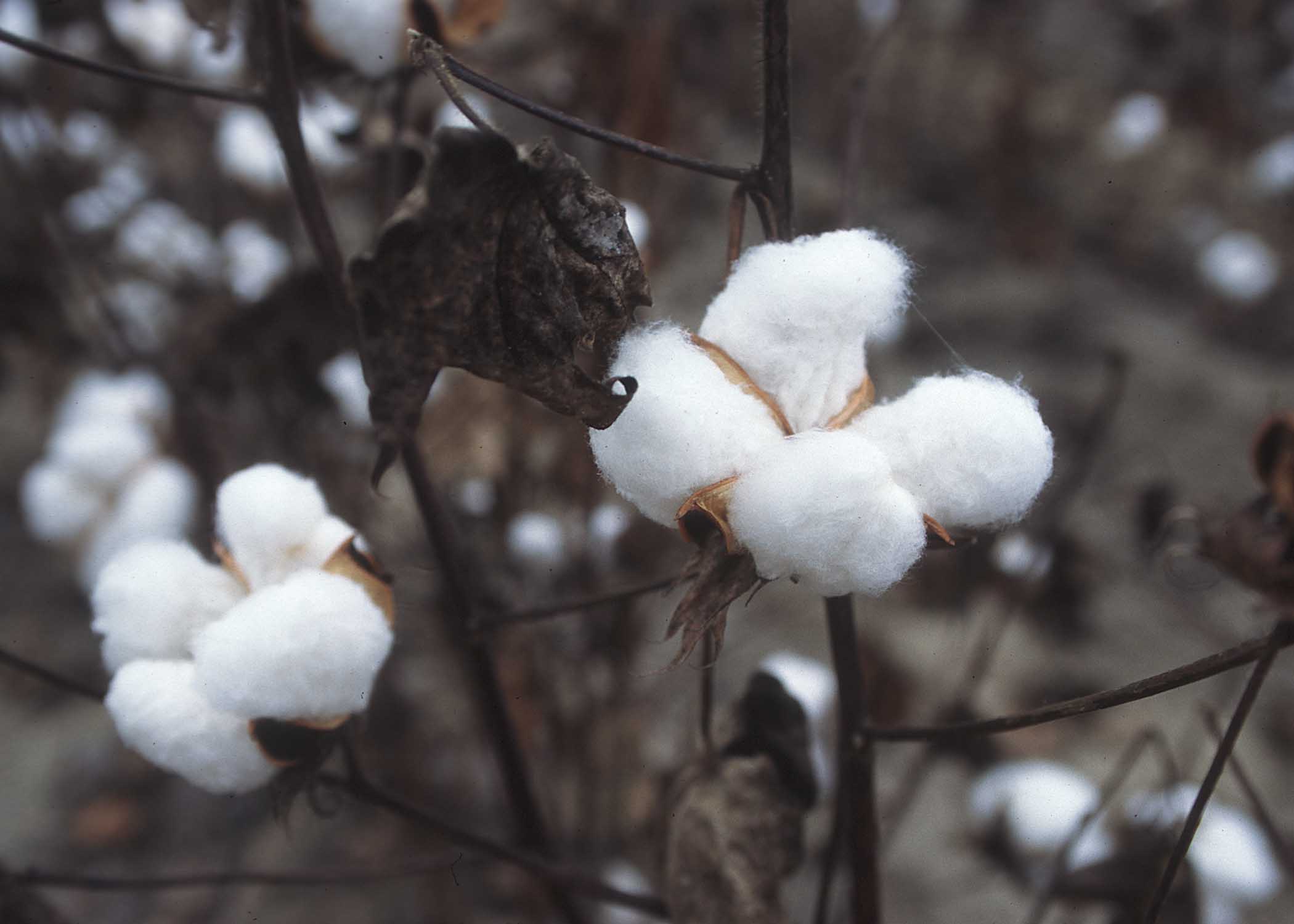 The US House of Representatives has passed the 2007 Farm Bill by 231 to 191 votes. There is often a conflict between trade policies that are in the best interests of domestic groups and those that promote development in other countries. The farm bill is a rare example of a law that is detrimental to both. It rewards big agribusiness at the expense of family farmers at home and abroad. The new bill contains some good news thanks to the Democrats (improvements in the food stamps program, funding for conservation efforts and fairer taxation of US subsidiaries of foreign firms) but doesn't fundamentally reform damaging subsidies. As Kim Elliott at the Center for Global Development points out 70 per cent of subsidies go to 10 per cent of farm operations: Of the $10 billion in payments for specific commodities in 2004, 60 percent went to just two crops--corn ($4.5 billion) and cotton ($1.6 billion). But rather than reform this discriminatory and inequitable system, legislators preferred to buy off selected critics by adding a few dollars to nutrition and conservation programs, while piling on more trade-distorting subsidies for wheat and other grains, soybeans, and sugar. This is the real face of protectionism in the US, not family farmers or domestic manufacturers trying to compete in a system that benefits multinationals, not trade unionists and environmental activists campaigning for basic regulatory standards to be included in free trade agreements, and not protesters who question the nature of globalization. Why was there such an enormous fuss about inserting ILO standards into the text of trade agreements, yet very little protest over this incredibly unfair bill? And why are 'free traders' in Congress willing to let this continue? Passing this bill without cutting farm subsidies shows developing countries in the WTO that the US is hardly serious about the 'development' aspects of the Doha round. The Washington Post reports that the White House has threatened a veto, on the grounds that subsidies remain high. Countries such as Brazil are critical of US and EU agricultural subsidies, the main stumbling block at a recent meeting of the G4 (Brazil, the EU, India and the US). It's enough to make even the most steadfast supporters of the Doha Development Agenda throw up their hands in disgust. What should we do to improve this situation? First of all, let's remove food stamps from the bill. There must be a better legislative vehicle for this important program. Presidential candidates, how about putting this in your health reform plans? Second, let's stop subsidizing big agribusiness. Oxfam America provides some good policy suggestions on this. The money could be better spent elsewhere - providing assistance to farmers that really need it, and sponsoring rural conservation and infrastructure development. And while we're reforming fast track, let's reform the way that Congress votes on farm subsidies as well. A trade policymaking process in which Congress and trade negotiators aren't even reading from the same book, let alone on the same page, is not one that works. Read more of Holly's posts at her blog TradingLives.Labels: agriculture, economic, Galbraith, trade
So it's come to this: China kills US homing pigeons
UK National Newspaper the Guardian reports on the latest spat between the US and China in an escalating (but petty) trade war over the safety of consumer goods. Inspectors at Beijing airport have seized and destroyed a shipment of 41 homing pigeons, after it was found that their health certification was incorrect and the number of birds failed to coincide with what was written on the accompanying documentation. This 'retaliation' comes on the back of a series of health scares involving Chinese products. Toxic ingredients in Chinese pharmaceutical products killed two people in Panama. Americans and Europeans found industrial solvent in tubes of toothpaste. American inspectors found cancer-causing chemicals in fish, and melamine in pet food. Apart from picking on the pigeons, China has also suspended some US pork and poultry exports. Of course, this is a symptom of much wider concerns about US trade with China- many of those in Congress are calling for the country to change its trade and monetary policies. As I have said in my previous post on this topic, China bashing is not the answer. China poses a huge policy problem for the US because of its geography- its enormous population makes labor cheap and its large land mass makes law enforcement difficult. The results of these respectively are i) outsourcing and a huge trade deficit and ii) cheap, but sometimes sub-standard consumer products. We must look to our own laws first. The US doesn't enforce ILO standards, the administration has allowed the currency to depreciate in order to keep the economy afloat, and we have underfunded the agency that's supposed to inspect the goods we buy. We have made it easier for companies to outsource jobs. We protect the rights of multinational companies and foreign investors over domestic producers, their workers and the public. Both China and the US must be allowed to grow and prosper in the global economy. Let's get the policies right so that we do so in a sustainable way. Labels: China, Galbraith, trade
Host a watch party for the AFL-CIO presidential debate!
Our Working Families Win project has proved how successful house parties can be- getting people who have never been active in politics before to engage with issues like trade and health care. Well, here's a chance to try it for yourselves! The AFL-CIO are encouraging us to hold 'watch parties' for their Presidential Candidates debate on August 7th. The whole thing is being broadcast on MSNBC at 7-8.30pm EST. Why not invite round friends and neighbors, sit back with a few beers (or what ever is your tipple) and get them talking about the work ADA is doing on the big issues- putting labor and environmental standards at the heart of trade agreements, raising the minimum wage, and pushing for single-payer, universal health care. If you are a house party newbie, try these tips from Working Families Win on how to host a party. It's grassroots organizing that's really going to make the difference in the 2008 election. Together we can build a solid majority that can change our nation for the better. Spread the word! Read more posts by Holly at her blog TradingLives.Labels: 2008 election, economic, Galbraith, Labor
What Kind of Economy?
ADA Vice President James K. Galbraith challenges us to create an economic agenda that encompasses the environment and social justice by standing up to the neo-Clintonian crowd and clearly defining a realistic approach to the economy in his recent article, "What Kind of Economy?", published in The Nation. Labels: economic, Galbraith
|
|


